Ideas are killing
innovation.
Corporate innovation tends to produce a great deal of activity and not much evidence. The fix is not more creativity. It is writing down what you believe in a form that can be proved wrong, cheaply, before anyone spends real money. This is the corporate venture development method we apply to every venture we build.
The explainer
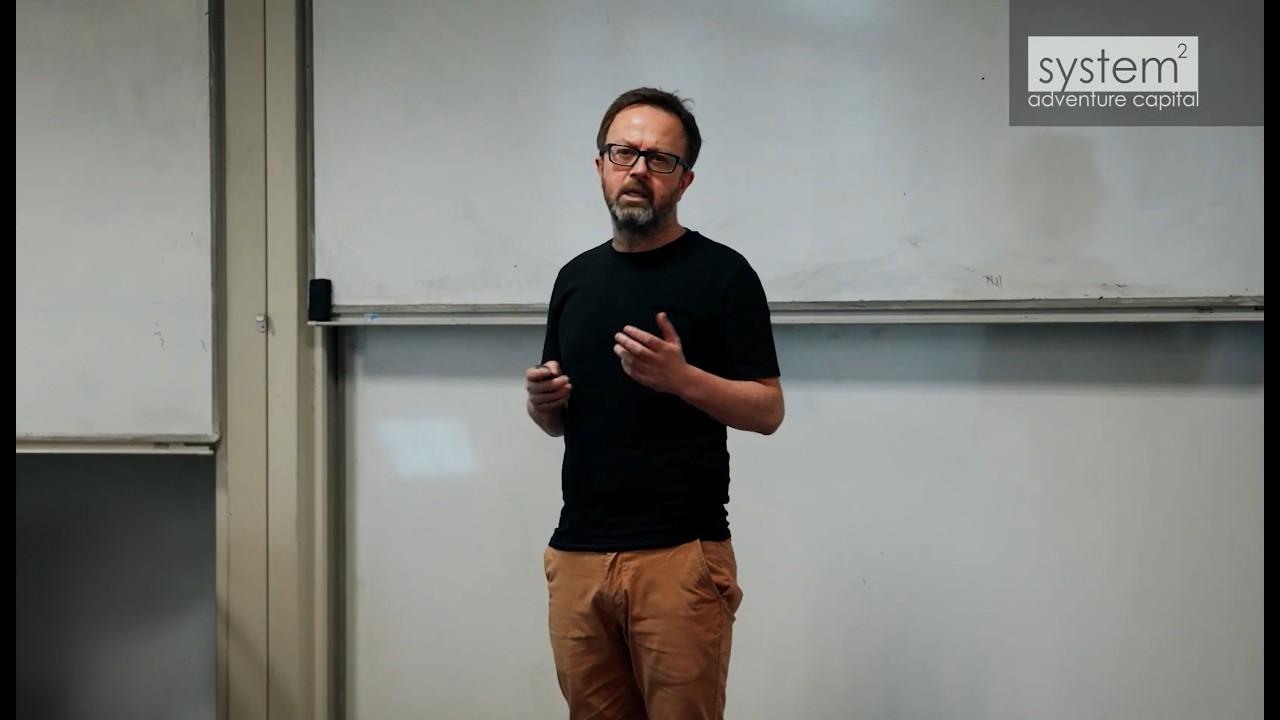
Imperial College, 2026 · 9 min
In short
The whole argument, spoken rather than read, recorded at Imperial College. The twenty-five slides and the book cover the same ground in more detail, if you would rather have it in writing.
The notation
Every venture we build starts as one sentence in three parts. It is deliberately awkward to write, because the awkwardness is where the thinking happens.
-
Because
The specific behaviour driving buying intent. Not the feature, not the technology — the behaviour that already exists whether or not you turn up.
-
Someone
The customer to whom the behaviour applies. Specific, describable and findable — if you cannot picture them ordering lunch, the hypothesis is not finished.
-
Will
The identifiable feature which addresses the behaviour. Something that can be counted, not an attitude that can be surveyed.
Written this way, a proposition stops being an idea and becomes a claim. Claims can be tested. Ideas can only be admired.
The book
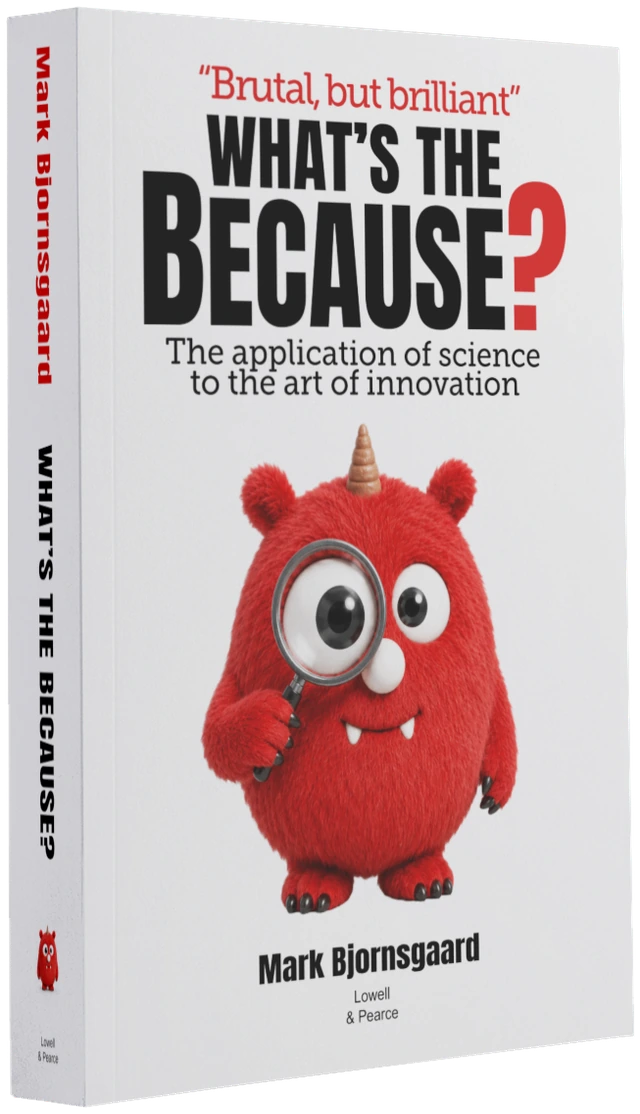
The method in full, with the arguments, the failures and the worked examples. If the argument does not land, we are probably not the right people for you — and the book has saved us both a meeting.
Too tight to buy the book?
Too lazy to listen to it?
Fair enough. The whole method, condensed to a PDF you can read on a train. Tell us where to send it.
Rinsing
One process,
applied the same way
every time.
Corporate venture development is usually run as a series of good ideas. We run it as four steps, in the same order, on every engagement.
-
Write the hypotheses
Not one. Dozens. Every plausible Because, held against every plausible Someone, until the field is genuinely covered rather than conveniently narrow.
-
Rinse them
Cut everything that cannot be tested cheaply, everything that is really a feature wearing a customer's clothes and everything the team is only attached to.
-
Run experiments
Real media, real money, real strangers, in a sprint. What survives is signal. What does not is killed early and without ceremony.
-
Build what survived
An independent team, controlling equity in their own hands and a corporate partner supplying the distribution, brand or supply chain a startup could never assemble.